

Red Branch Media uses AI. We’ve been using it for years, long before it became a press release for every agency that discovered ChatGPT in 2023. We were early, we were methodical, and we were picky about how we integrated it. That hasn’t changed. (If you want the longer version of that story, Maren wrote about the full timeline and what we learned along the way.)
This document explains what AI does inside your account, what it doesn’t do, and what we’ve built to make sure the work you receive is accurate, on-brand, and worth your time to read.
We use AI. We don’t hand it the keys.
AI helps us research faster, outline more efficiently, identify patterns across your content and competitors, repurpose your best-performing assets, and produce first drafts that give our team a running start.
It does not write your content. It does not decide your strategy. It does not replace the people on your account who know your business, your buyers, and your voice.
Every piece of work that reaches you has been shaped, reviewed, and approved by humans who understand your account. AI accelerates the parts of production that don’t require judgment. The parts that do require judgment — positioning, tone, accuracy, what to say and what to leave out — those stay with your team.
We wrote about this balance in detail in Human-First Marketing vs AI, and we meant it. A lot of agencies went full-AI in 2023 and 2024. We watched, learned from what broke, and built something different.
Your data stays inside approved, paid tools.
No client information goes into free AI tools. No client data goes into open-source models. No one on your account experiments with a new tool using your information without executive approval.
We maintain a vetted list of paid AI platforms. Those are the only tools that touch client work. If a team member wants to evaluate something new, it goes through our partners before it goes anywhere near an account. We built a full AI Governance Toolkit around this process, and it’s the same framework we use internally.
We built a system most agencies don’t have.
Most agencies using AI start with a blank prompt and a brief. We start with a structured operating system we spent years building.
Every RBM client runs on our Agent-First Operating System. AOS means your account context — your positioning, messaging, competitive landscape, ICP, keywords, proof points, objections, tone, and voice — lives in a standardized, structured set of documents that both our team and our AI tools can read and work from.
Nine folders per client, organized the same way for every account. A Messaging Framework with a locked structure: positioning, proof, ICP messaging, competitive intel, objections, answer bank, headlines, CTAs, boilerplate. A Project Intelligence Document that routes to everything else. A five-document set for every campaign we run: Objective, Constraints, Execution Artifacts, Performance, Learnings.
When AI touches your account, it’s working from that context — not from generic industry language or whatever it scraped from the internet. That’s why the output sounds like your company and not like a marketing robot.
Keeping that system accurate is our job, not yours.
The AOS is only as good as what’s in it. Our team is responsible for keeping those documents current. When your positioning shifts, when you launch something new, when a competitor makes a move, when your priorities change on a call — those updates go into your context documents so everything produced downstream reflects reality.
You don’t have to worry about whether we’re working from stale information. That’s our responsibility, and we take it seriously. If something changes on your end, tell us. We’ll make sure the system knows.
We don’t publish AI output. We publish finished work.
There is no scenario in which AI-generated text goes directly from a tool into your deliverables. That’s not how our process works.
Every piece of content goes through our editorial process. Your team combines multiple AI-assisted research passes with their own knowledge of your account. They layer in real examples, specific data points, and the language your audience responds to. They check claims against your approved materials. They remove filler, repetition, and anything that sounds generic. They run it through our style tools and editorial review before it reaches your Account Manager, and your AM reviews it before it reaches you.
The goal of AI in our process is not to produce more content faster. It’s to free up time and attention so your team can spend more of both on the parts that make the content good: strategy, specificity, voice, and judgment.
Your voice is not negotiable.
AI has a default voice. It’s polished, it’s pleasant, and it sounds like every other piece of AI-generated content on the internet.
That’s not what you’re paying for.
We wrote about this problem across the industry in AI Content Quality Problems in B2B Marketing — the short version is that 39% of B2B marketers say AI hurt their brand voice, and the real problem isn’t the tool, it’s that most teams never defined what their brand sounds like in the first place.
Your Messaging Framework, voice documentation, and onboarding notes define how your brand sounds. Our team uses those as the standard, not as a suggestion. If your CEO is direct, your content is direct. If your brand is technical, your content is technical. If your audience expects a certain vocabulary, we use that vocabulary.
AI can help us get to a first pass faster. It cannot decide how your company should sound. That decision was made during onboarding, it’s documented in your account files, and it gets enforced in every review cycle.
If your agency can’t tell you where a stat came from, don’t trust the stat.
We verify. We don’t assume.
AI can present a fabricated statistic as confidently as a real one. We know this, and we plan for it. (Maren wrote an entire piece on AI’s tendency to tell you what you want to hear — it’s worth reading if you want to understand why verification matters so much in AI-assisted workflows.)
Claims in your content are checked against your approved materials — your product documentation, your sales collateral, your website, the information your team has given us directly. External claims are sourced from credible, verifiable origins. We don’t invent data points because they’d sound good in a headline.
If we cite a number, we know where it came from. If we reference a capability, it’s one you told us about or one we confirmed. “AI said so” is not a citation.
We’re also using AI to protect your visibility.
This part matters for your business beyond content production. The way buyers research vendors is changing. AI search platforms — ChatGPT, Perplexity, Google’s AI Overviews — are compressing the discovery process. Your buyers are asking AI which vendors to consider before they ever visit your website.
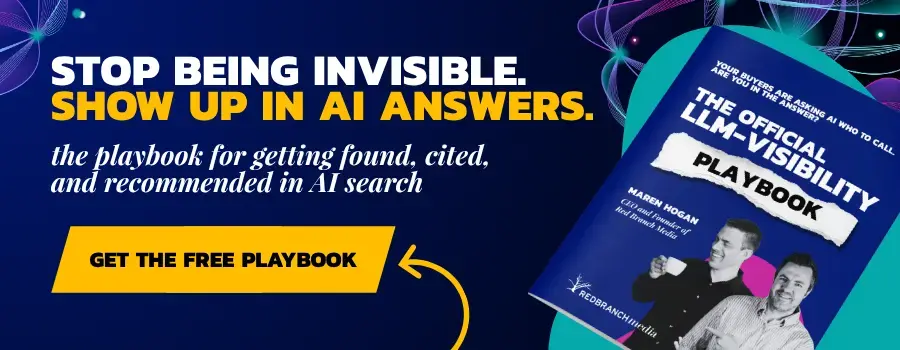
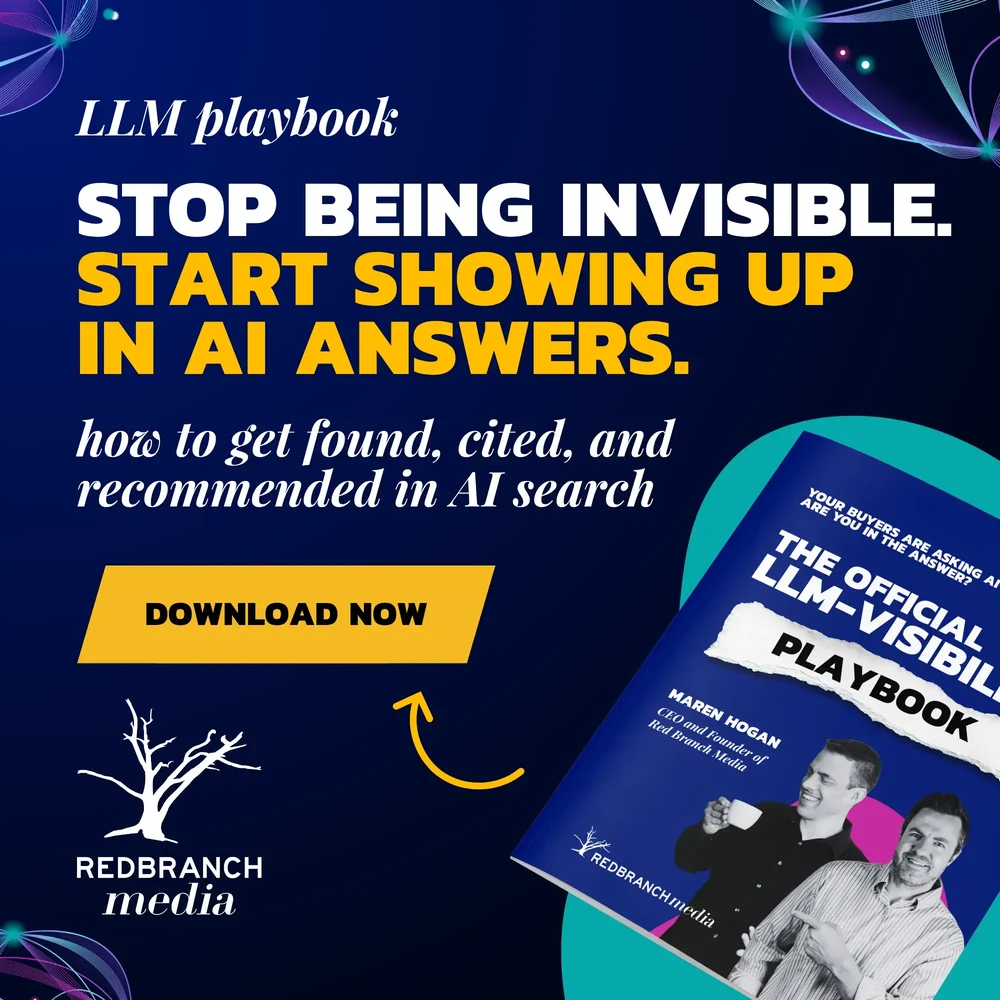
We’ve been tracking this shift and writing about it publicly since before most agencies acknowledged it was happening. We published a full LLM Visibility Playbook for B2B and a detailed breakdown of what AI search means for your organic traffic.
The content we produce for your account isn’t just written for human readers. It’s structured so AI systems can find it, trust it, and cite it when your buyers ask questions in your category. That means clear answer-first formatting, proper schema, strong authorship signals, and the kind of specific, sourced claims that LLMs prefer to surface. This is Answer Engine Optimization, and it’s built into how we write for you, not bolted on as an add-on.
If you want to go deeper on what AI means for HR tech vendors specifically in 2026, we covered that too.
What this means for you, practically.
Your content is produced faster than it would be without AI, and the time saved goes back into making it better — not into cutting corners.
Your account context is more organized and more accessible than it has ever been, which means fewer errors, less drift from your positioning, and faster ramp-up when we build new campaigns.
Your voice, your claims, and your strategy are protected by a structured system and a human review process that doesn’t get skipped.
And if you ever want to know exactly how AI was used on a specific deliverable, ask. We’ll tell you. Transparency isn’t something we perform when it’s convenient. It’s built into how we operate.
We were good before AI. We got better with it.
RBM has been doing B2B marketing for over 20 years, the last 20 of those in HR Tech specifically. We built our reputation on understanding your space, knowing your buyers, and producing work that sounds like it came from someone who cares about the subject — because it did.
AI didn’t change what we do. It changed how fast certain parts of the process move, and it let us build an infrastructure for your account context that makes every piece of content more grounded and more consistent.
The expertise, the editorial standards, the relationships with the analysts and media that shape your market, and the stubbornness about quality that built this agency — those aren’t automated. They’re the reason the automation works.
Want to see how we think about AI across the industry? Here’s a selection of what we’ve published:
- Human-First Marketing vs AI: Red Branch Media’s Approach
- Navigating the AI Journey: Lessons from the Frontlines
- AI Content Quality Problems in B2B Marketing
- AI’s Lying Teenager Phase: When AI Learned to Deceive Us
- AI Is Killing Your PR: Only 12% of Media Shows Up in AI Answers
- AI Overviews & Organic Traffic: A New Playbook for B2B
- AI in HR Tech: What Vendors Need to Know in 2026
- The AI Layoff Undo Button: Why Companies Keep Rehiring
- LLM Visibility Playbook for B2B Brands (downloadable)
- AI Governance Toolkit for Marketing Agencies (downloadable)
Frequently Asked Questions
They keep brand voice documented and enforce it as a standard, not a suggestion. Red Branch Media uses a locked Messaging Framework and voice documentation from onboarding, and every AI-assisted draft is checked against that framework before it reaches a client.
No. AI supports research, outlining, and first-draft speed, but every deliverable is shaped, fact-checked, and approved by the account team before it goes to a client. No AI-generated text is published without a full editorial pass.
Client information only goes into a vetted list of paid AI platforms, never free or open-source tools. Any new tool has to go through partner approval before it touches an account.
Claims get checked against the client’s own approved materials — product documentation, sales collateral, and information the client has provided directly. External claims are sourced from credible, verifiable origins rather than accepted at face value.
AEO is the practice of structuring content so AI search platforms like ChatGPT, Perplexity, and Google AI Overviews can find it, trust it, and cite it in response to buyer questions. It relies on answer-first formatting, schema, clear authorship, and sourced claims.
Table of Contents

Related Posts
Other reads you'll definitely love
 18 Minute Read
Be the Answer: How Red Branch Media Makes Your Brand the One AI Recommends
B2B Marketing Strategy AI & Innovation Content & Thought Leadership
 6 Minute Read
57,000 Jobs Added. 62,000 Cut. Same Month. Nobody’s Explaining Why.
9 Minute ReadHow HR Tech Brands Get Cited in ChatGPT, Perplexity, and Google AI
B2B Marketing Strategy HR Tech Marketing AI & Innovation AEO